

Cart
0
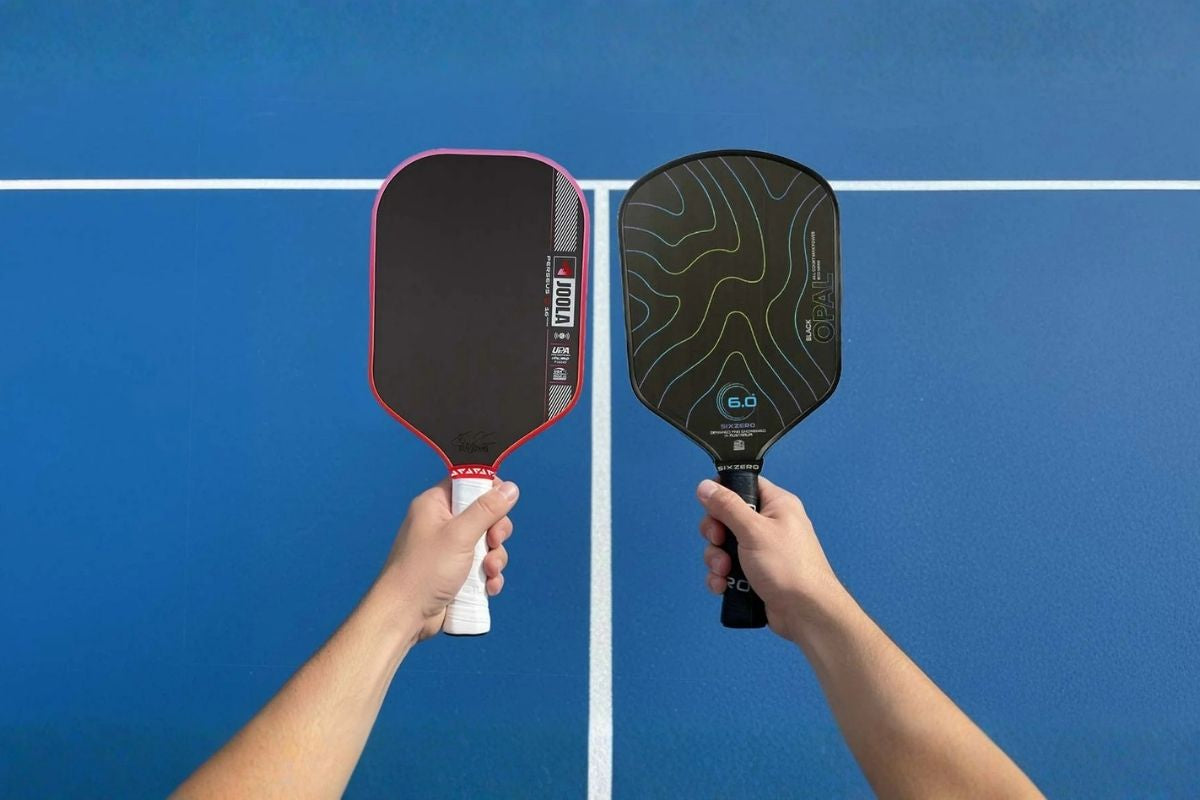
If you’re new to pickleball, choosing a paddle can feel confusing. You jump online or walk into a shop, and suddenly you’re hit with unfamiliar terms like carbon fibre, core thickness, grip size, and swing weight.
Everything looks the same, yet somehow everything is different. And because of that, many beginners end up frustrated or worried about buying the wrong thing.
You’re not alone. Plenty of new players feel overwhelmed when trying to choose their first paddle, and that’s totally normal.
The good news is that finding the right paddle doesn’t have to be complicated. This guide will explain how to pick a pickleball paddle that feels right for you.
Why the Right Paddle Makes a Big Difference
Your paddle is the one piece of gear you rely on for absolutely every shot. When you choose the right one, you’ll notice the difference immediately. Your swings feel cleaner, your control improves, and even long games feel easier on your arm.
For beginners, especially, using a paddle that matches your needs can accelerate your progress and help you enjoy pickleball a whole lot more.
Start With Your Play Style
Before looking at thicknesses and weight numbers, it helps to understand the kind of player you naturally are. Your play style is one of the easiest ways to narrow down your paddle options.
Control Player
If you enjoy soft shots, patient rallies, and keeping the ball in play, you probably lean toward a control-focused style.
A control paddle usually has a thicker core, a softer feel, and a larger sweet spot, making it easier to keep your shots consistent during dinks and resets.
Power Player
If you love driving the ball hard or finishing points quickly, you’ll benefit from a paddle built for power. These paddles tend to be thinner and more responsive, giving you that extra “pop” when you attack.
A slightly heavier or elongated paddle can also help you generate more force.
All-Rounder
Many beginners fall somewhere in the middle, enjoying both soft touches and aggressive shots. If that sounds like you, look for a paddle with a balanced feel.
Something midweight with a core that isn’t too thin or too thick. It’s a great way to explore the sport while keeping your options open.
Choose Based on Your Skill Level
Your experience level plays a big role in how a paddle will feel in your hands. Here’s how to match your paddle choice with where you are in your pickleball journey.
If You’re a Beginner
As someone just starting out, you’ll appreciate a paddle that’s:
- Comfortable
- More forgiving
- Easy to control
Paddles with thicker cores and medium weight tend to feel stable and help you build consistency during shots. The sweet spot is usually larger too, which makes clean contact much easier to learn.
If You’re an Intermediate Player
Once you’ve played enough to develop your strengths, you may want a paddle that responds a little more to your touch. A midweight paddle with a medium to thick core offers both control for the soft game and enough responsiveness for faster drives.
This is also a stage where some players start experimenting with elongated shapes for more reach.
If You’re an Advanced Player
When you know exactly how you like to play, you can look for paddles designed around:
- Spin
- Precision
- Power
Advanced players often choose paddles with raw carbon fibre surfaces or specific swing weight profiles to match their strengths.
Key Paddle Features Explained
These are the core details to understand when figuring out how to choose a pickleball paddle.
Paddle Thickness (16mm vs 14mm)
Thickness has a big impact on how your paddle feels when it makes contact with the ball.
- A thicker paddle, usually around 16mm, gives you more control and a softer touch.
- A thinner paddle, around 14mm, feels more lively and powerful. It delivers more “pop” off the face and suits aggressive players.
Paddle Weight
Weight influences both your comfort and your ability to react quickly during play.
- Lightweight paddles are easier to swing and feel great during fast volleys.
- Mid-weight paddles strike a nice balance between comfort and stability.
- Heavier paddles generate more power, though they can be tiring to manoeuvre.
If you’re learning how to pick a pickleball paddle, choosing something in the mid-weight range is a reliable starting point.
Swing Weight
Swing weight describes how heavy a paddle feels while it’s moving through the air.
- A lower swing weight feels quick and easy to manoeuvre.
- A higher swing weight feels more solid and powerful.
Beginners often prefer something in the lower to mid range because it’s easier to control without straining your arm.
Twist Weight
Twist weight refers to how stable a paddle feels when you hit the ball off-centre.
- A paddle with a higher twist weight will stay more stable during contact.
- Lower twist weight can cause more twisting or vibration on mishits.
If consistency is your goal, a paddle with good stability is worth prioritising.
Handle Length and Paddle Shape
Handle length affects your comfort, reach, and shot variety.
A standard handle works well for most players. If you use a two-handed backhand or enjoy singles play, an elongated handle paired with a longer paddle shape offers added reach and leverage.
Grip Circumference / Hand Size
Grip size is often overlooked, but it plays a big role in comfort and injury prevention.
- A smaller grip allows for easier wrist motion.
- A medium grip suits most players.
- Larger grips feel secure for players with bigger hands.
If you’re unsure, starting with a medium grip is usually a safe bet.
Pickleball Paddle Pricing: What to Expect at Each Level
Finally, it’s important to talk about pricing, as there is a wide range when it comes to pickleball paddles. Understanding what different price levels offer can help you set realistic expectations and avoid overspending.
Beginner Paddles ($0 - $200)
Beginner paddles are designed to be affordable and easy to use. They focus on comfort, forgiveness, and durability rather than advanced performance features. These paddles are ideal if you’re new to the sport, playing casually, or still figuring out your play style.
You can expect a larger sweet spot, a softer feel, and simple construction that helps you learn the basics without feeling overwhelmed.
Our recommendation for beginner paddles:
Intermediate Paddles ($200 - $300)
Intermediate paddles offer a noticeable step up in performance. They typically provide better control, improved feel, and more consistency across shots. These paddles suit players who play regularly and want equipment that can keep up as their skills improve.
At this level, you’ll start to notice better materials, improved balance, and more refined paddle designs that support both control and power.
Our recommendation for intermediate paddles:
Advanced / Pro Paddles ($300+)
Advanced or pro-level paddles are built for experienced players who know exactly what they want from their game. These paddles often use higher-quality materials and are designed to maximise spin, precision, and responsiveness.
While they can feel incredible in the right hands, they aren’t necessary when you’re just starting out. Most beginners will benefit far more from a forgiving paddle than a highly specialised one.
Our recommendation for advanced or pro paddles:
Final Thoughts
Choosing the right pickleball paddle doesn’t need to be confusing. Once you understand your play style, your experience level, and how paddle features affect your game, the decision becomes much easier.
